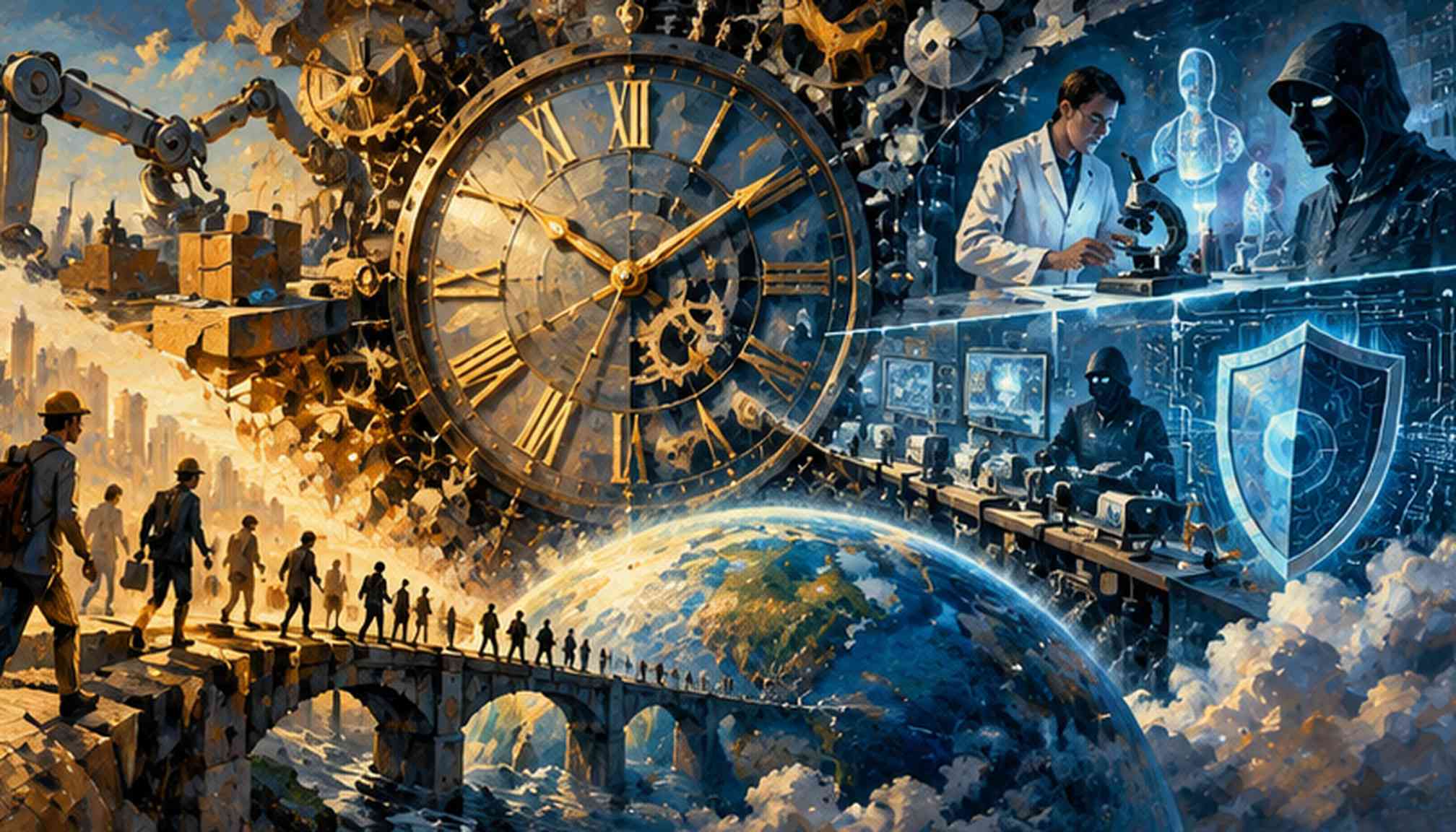
Microsoft co-founder Bill Gates has warned that artificial intelligence could trigger two decades of profound social and economic disruption, arguing that governments remain dangerously unprepared for its consequences.
Speaking in an October 22 interview with The Verge, Gates identified AI-enabled cyberattacks, biological threats, mass employment disruption and malicious uses of increasingly powerful systems among his principal concerns.
He described AI as an extraordinarily consequential technology, potentially more dangerous than nuclear weapons because of its accessibility and broad applications.
Gates criticized governments for moving too slowly and questioned whether voluntary industry safeguards could adequately address emerging risks.
His warnings echo earlier proposals to tax automation and preserve certain occupations for humans, particularly jobs requiring empathy and difficult personal judgments.
The concerns also intersect with broader debates over AI-driven labor-market disruption and economic uncertainty.
Despite these warnings, Gates remains optimistic about AI's potential to accelerate medicine, agriculture and scientific discovery. He argues that stronger public oversight is essential to ensure those benefits outweigh the risks.