Anthropic has opened a life-sciences laboratory in the Bay Area and describes an early result from work that pairs Claude agents with human bench experiments. The stated aim is to scan large DNA collections for uncharacterized protein families, write hypotheses, and test a few of them in the wet lab. The laboratory operates at biosafety levels 1 and 2, the lower rungs of containment, and does not handle pathogens that infect people. All physical experiments are done by human scientists.
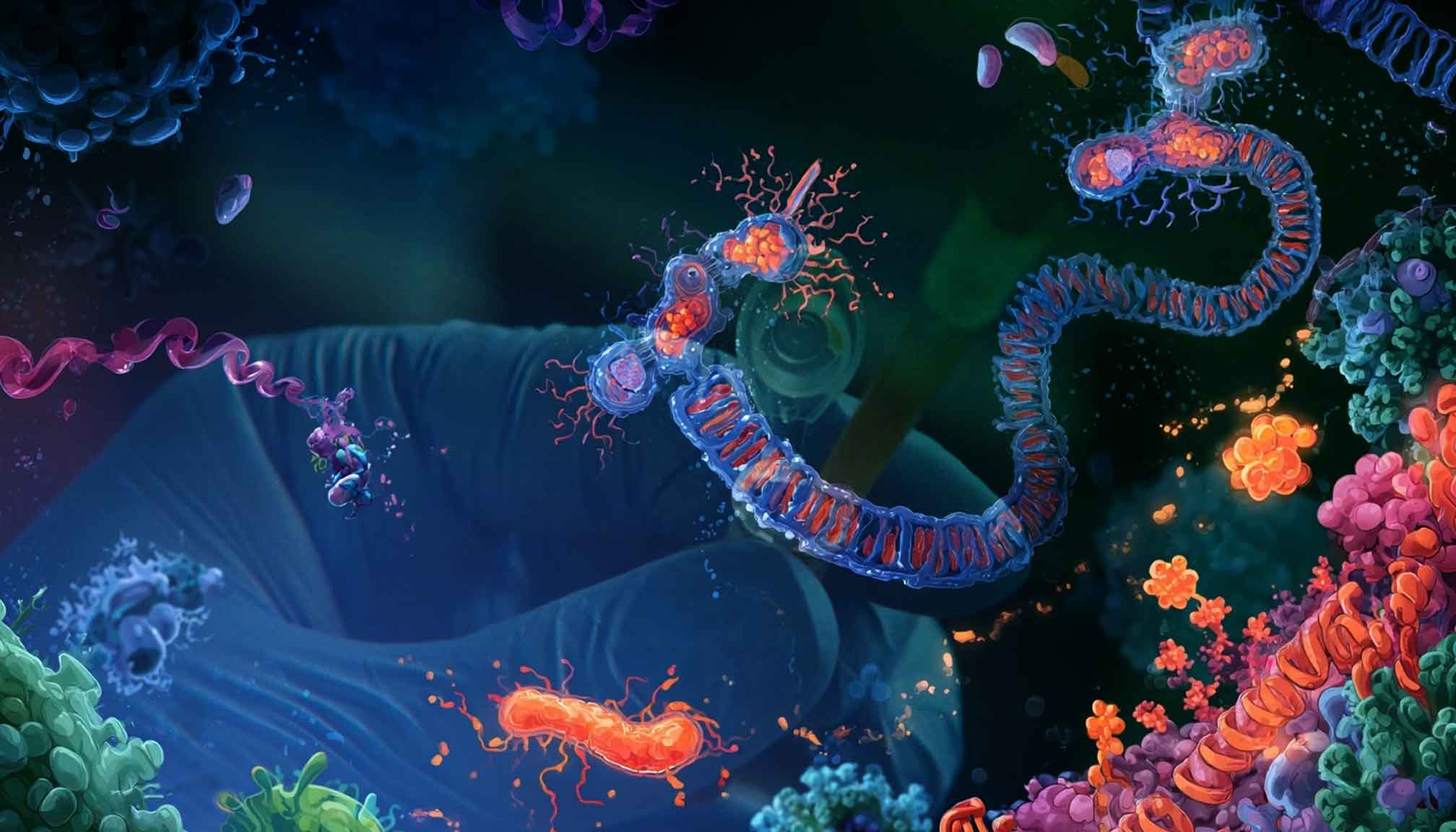
The reported early finding concerns array-associated reverse transcriptases, or ART. A reverse transcriptase is an enzyme that copies RNA into DNA. ART is found mainly in bacteriophages, viruses that infect bacteria. It has three parts: the reverse transcriptase, a partner gene, and a long run of evenly spaced DNA repeats. Anthropic says Claude was first to treat the enzyme, the partner gene, and the non-coding repeat array as one system. Non-coding means the repeat DNA is not thought to specify a protein.
The research is described in a technical report.
How the search was run
Researchers gave Claude a high-level prompt to look through a large DNA database for interesting reverse transcriptases. About 950 agents then ran for 21 hours and used 210 million tokens. They collected more than 200,000 reverse transcriptases, marked about 3,500 candidate systems, and wrote reports on the 20 they judged most compelling. One agent noticed a tandem repeat array next to an unusual reverse-transcriptase gene, compared the layout with known systems, searched the literature, and filed a report. Anthropic says human involvement in that computational pass was limited to the first prompt and later laboratory tests.
First lab measurements show that the ART array is read out as a set of distinct short RNAs. That is reminiscent of a CRISPR array, a bank of repeat-spaced sequences that makes CRISPR systems programmable. Anthropic notes that only a handful of known systems share this combination of features, and those systems can cut, copy, or paste DNA. ART’s biological job is still unknown. Further experiments are underway.