Mindbytes Oct 23, 2026 Warhound Raises $200 Million to Develop Genetically Enhanced Military Dogs Warhound launches with $200 million to develop genetically enhanced working dogs, combining biological research with advanced military equipment for defense and emergency operations. gizmo guru 1 min read

News Oct 22, 2026 OpenAI and partners use thousands of AI agents to map mouse brain data in 32 minutes OpenAI, PerturbAI, and Scripps Research deployed nearly 2,000 GPT-Rosalind agents to analyze an 8-million-cell mouse brain CRISPR atlas. The distributed approach completed in 32 minutes work estimated to take humans months to a year, identifying unexpected differences between Tsc1 and Tsc2 gene effects in the cerebellum and a potential cholesterol-related mechanism in Perry syndrome. The reasoning atlas is publicly available for researchers. Giulio Prisco 2 min read
News Oct 15, 2026 Scientists create designer enzymes that cut specific proteins like molecular scissors Researchers at the University of Washington have computationally designed synthetic proteases - enzymes that precisely cut other proteins at chosen sequences. Two studies published in Nature describe zinc-based metalloproteases and cysteine proteases created entirely from scratch using deep learning. These designer enzymes show rate enhancements millions to hundreds of millions of times faster than uncatalyzed reactions, and they work inside living cells. The work opens paths to destroying disease proteins, clearing misfolded proteins from neurodegenerative diseases, and activating drugs only in targeted tissues. Giulio Prisco 2 min read
Community Jun 8, 2026 Decoding Disease: Locating the Tissues That Trigger Illness New genomic breakthrough reveals exactly where diseases strike. By decoding polygenic signals, scientists pinpoint the tissues and cell types driving illness for precision medicine. Edilawit Manaye 4 min read
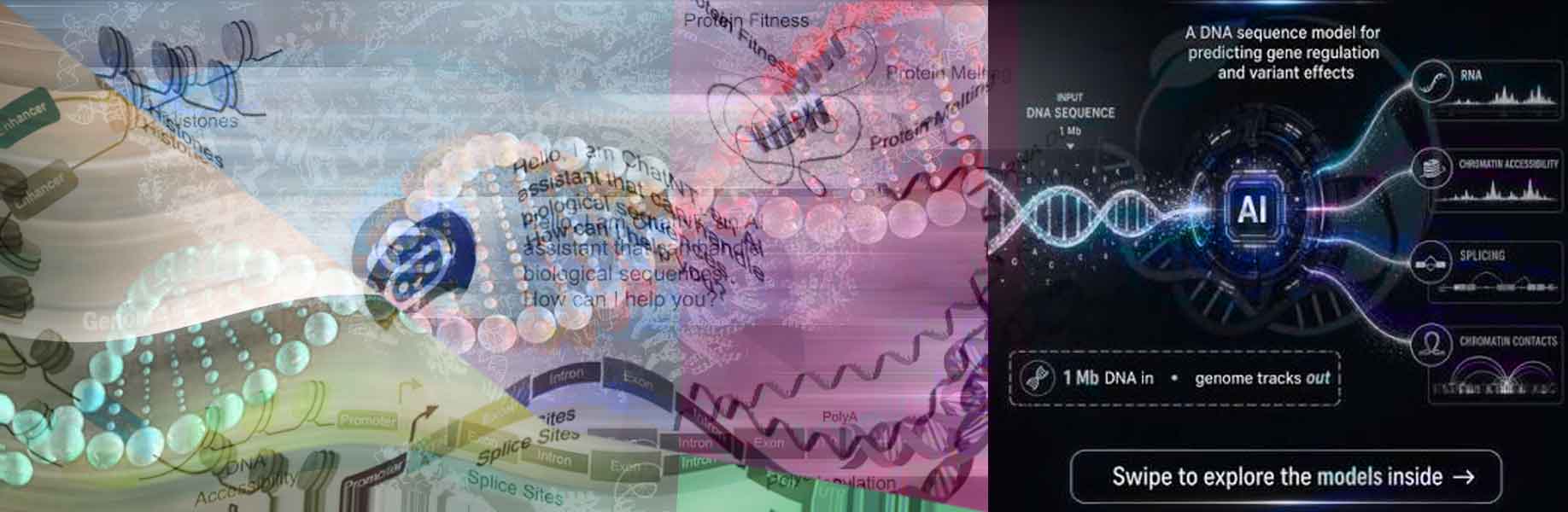
News Sep 9, 2026 A searchable map of every one-letter change in human DNA Google DeepMind has precomputed predicted effects for all nine billion possible single-letter DNA changes and released a simple score so researchers can look them up. Giulio Prisco 2 min read
News Sep 30, 2026 Anthropic's AI enzyme discovery faces originality questions amid pattern of disputed claims Anthropic announced that its AI model Claude discovered a novel CRISPR-like enzyme system in just 21 hours, a task that might have taken humans months. However, a computational biologist at the University of Copenhagen claims he identified the same proteins a year earlier, raising concerns that this may be part of a broader pattern of disputed AI research claims. Giulio Prisco 2 min read
News Sep 24, 2026 Claude finds a phage enzyme system with CRISPR-like repeats Anthropic reports that language-model agents flagged a reverse transcriptase beside a DNA repeat array, a pattern later checked in a Bay Area laboratory. Giulio Prisco 2 min read
News Sep 11, 2026 An AI model learns DNA by comparing genomes across species Researchers at the University of California, Berkeley built an efficient genomic language model that uses evolutionary comparisons to find DNA changes most likely to affect health and inherited traits. Giulio Prisco 2 min read
News Aug 26, 2026 A map of what genomic AI models learn from DNA A new interpretation method traces each prediction back to individual DNA bases, strips out laboratory artifacts, and points to unexpected rules of how the genome is folded. Giulio Prisco 2 min read
News Aug 7, 2026 Artificial intelligence designs working bacteriophages that kill bacteria A generative AI model creates complete viral genomes that function in the laboratory and may help develop new ways to treat antibiotic-resistant infections. Giulio Prisco 2 min read