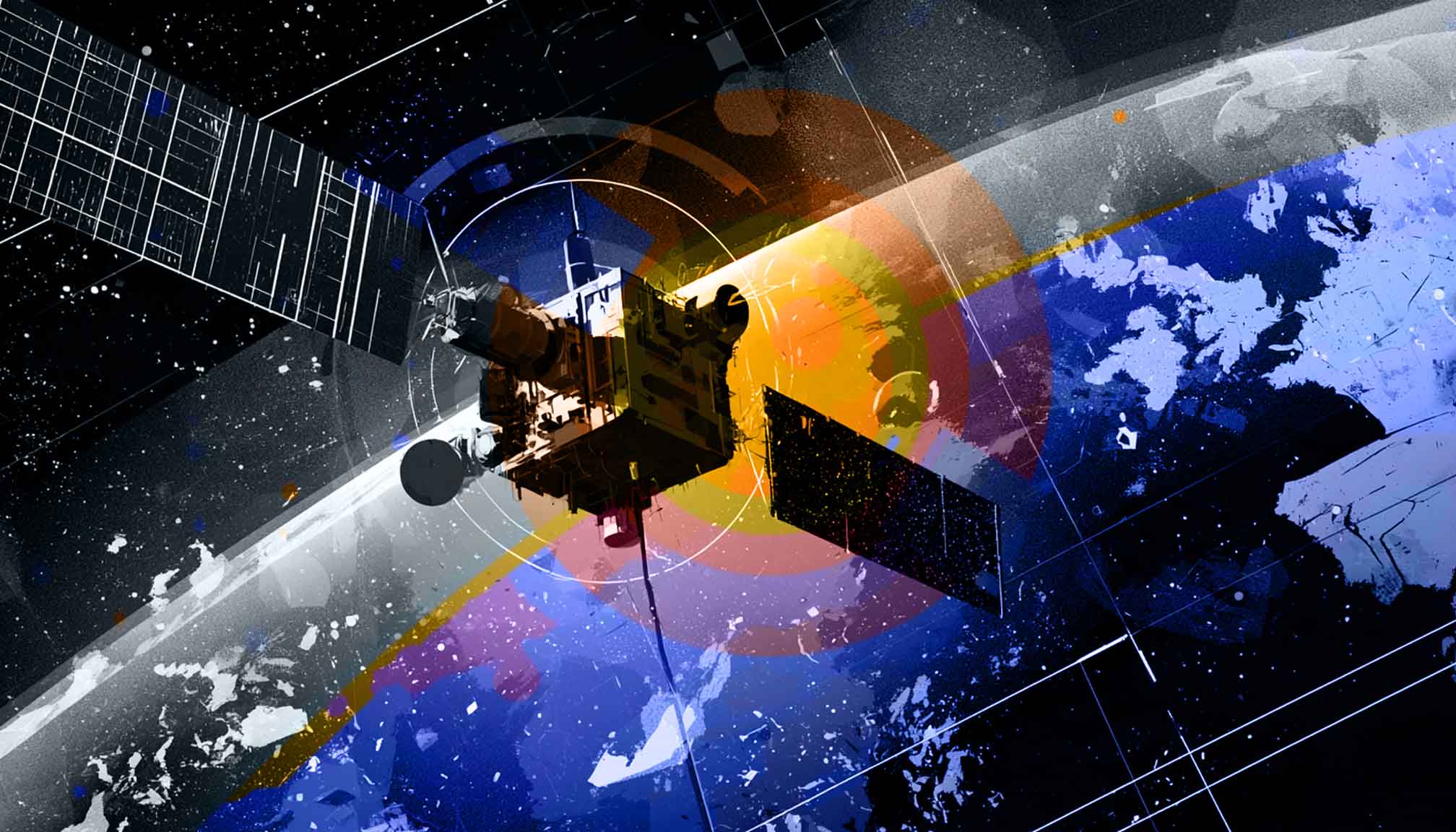


Google's prototype satellite for Project Suncatcher launched into orbit aboard the Transporter-18 rideshare mission with SpaceX on October 1, 2026. The company confirmed contact with the spacecraft and reported that it is operating as expected.
Project Suncatcher is a long-term research effort to explore whether space could one day host scalable machine learning infrastructure. The prototype satellite, built in partnership with Planet, a satellite imaging company, carries Tensor Processing Units, or TPUs, which are specialized chips designed to accelerate artificial intelligence computations.
The initiative aims to determine if low Earth orbit could become a viable location for AI compute, given that satellites in this environment can access near-constant sunlight and generate up to eight times more solar power than equivalent installations on Earth. Over the coming weeks, researchers will gather in-orbit data on how these TPUs handle the physical stress of spaceflight and the radiation and thermal extremes of space. The company noted that some aspects of this technology can only be tested in an actual orbital environment.
Engineering challenges and future plans
A technical paper has been published. During a rocket trip into low Earth orbit, spacecraft experience intense vibration and sustained acceleration loads up to 10 times the force of gravity, while individual TPU components can experience forces ranging from 50 to 100 g. Engineers conducted vibration testing by intensely shaking the satellite on all three axes to replicate launch frequencies. Radiation presents another significant obstacle - solar events and cosmic rays can damage electronics - so the team tested TPUs in a proton beam facility at UC Davis's Crocker Nuclear Laboratory while running AI workloads. Initial results showed that Trillium TPUs can survive a radiation total ionizing dose exceeding what they would receive during a five-year space mission. Cooling poses a particular challenge in the vacuum of space, since TPUs generate substantial heat in concentrated areas and heat can only be dissipated via radiators without an atmosphere. The team is evaluating approaches combining heat pipes and radiators, with preliminary testing conducted in thermal vacuum chambers.
Looking ahead, Google plans to place two satellites in orbit in 2027 to test high-bandwidth laser interconnection, which requires maintaining precise alignment between moving satellites. Future satellite designs will carry dozens of TPUs arranged in clusters, using these laser links to coordinate processing of larger AI workloads.