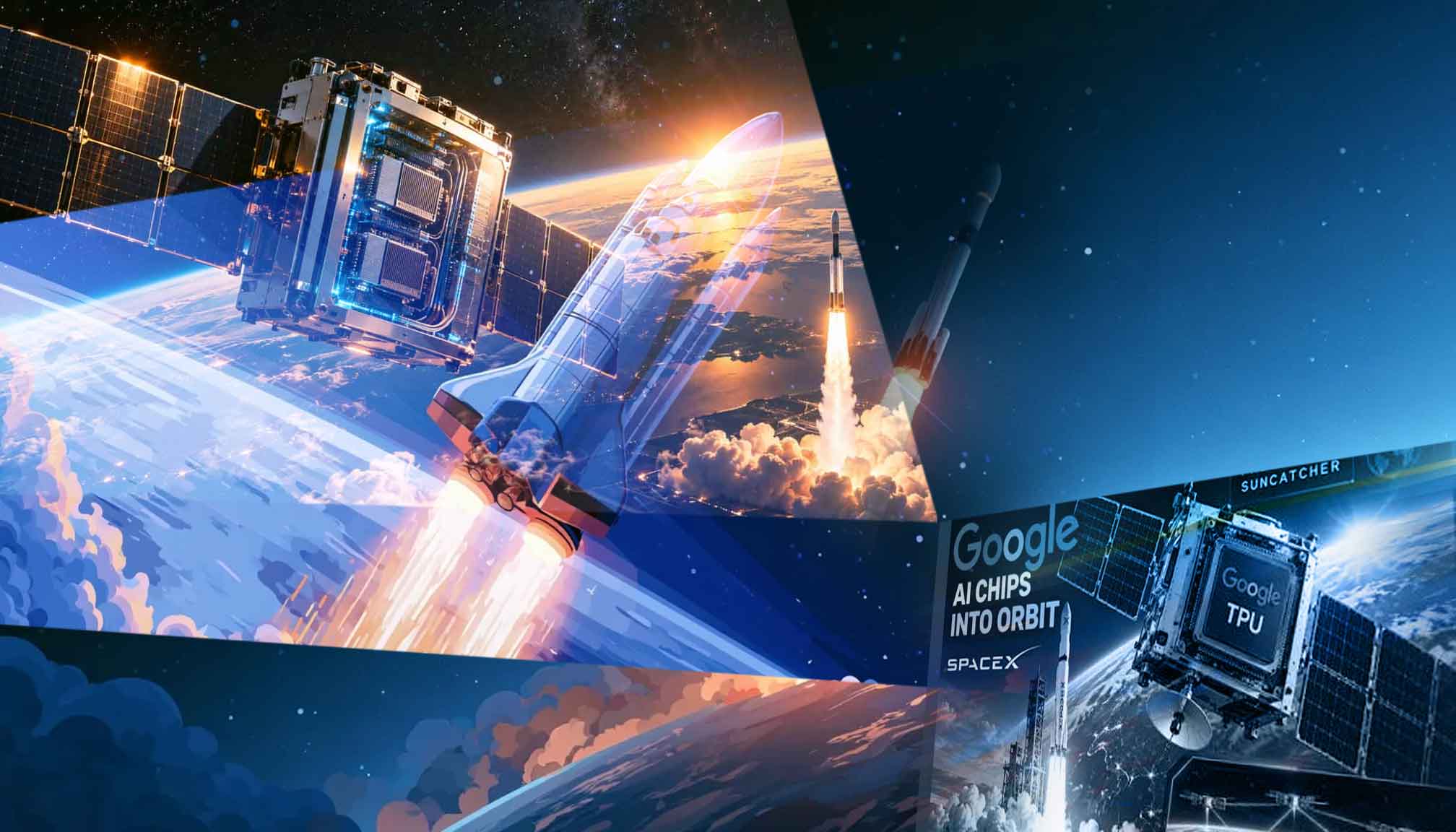
Article Oct 21, 2026 Tech giants are putting AI data centers in orbit Google and SpaceX recently launched the first experimental satellite equipped with AI chips, testing whether orbital data centers could solve Earth's energy constraints. The project promises abundant solar power and reduced environmental impact, but faces significant technical hurdles including cooling, radiation, and data transmission. Giulio Prisco 6 min read

News Oct 21, 2026 Meta announces Prometheus, a gigawatt-scale AI supercluster with nearly one million GPUs Meta has revealed Prometheus, its most ambitious AI infrastructure project to date. Located in New Albany, Ohio, the supercluster is designed to train next-generation foundational models at an unprecedented scale. The first phase is already complete and was used to train the company's Muse family of models. At full scale, Prometheus will comprise roughly one million GPUs distributed across multiple interconnected buildings, all functioning as a single machine. The facility features advanced closed-loop liquid cooling and multi-generational NVIDIA hardware including GB200 and GB300 platforms. Giulio Prisco 2 min read
News Sep 25, 2026 Google to launch AI chips into orbit next week aboard SpaceX rocket Google will launch a prototype satellite on October 1 to test its Tensor Processing Units in space as part of Project Suncatcher. The mission will evaluate how AI chips perform under radiation, thermal extremes, and the physical stresses of spaceflight, marking the tech giant's first step toward potential orbital computing infrastructure. Giulio Prisco 2 min read
News Oct 5, 2026 Google completes Project Suncatcher prototype launch for orbital AI compute Google's Project Suncatcher prototype satellite successfully reached orbit aboard a SpaceX mission to evaluate whether machine learning infrastructure can function reliably in space. The mission will test Tensor Processing Units under radiation, thermal extremes, and launch vibration conditions, with future milestones planned for 2027 including satellite laser interconnection tests. Giulio Prisco 2 min read
Community Jan 28, 2026 The Age of Grown-Up Technology The ACM Fellows 2025 point to the arrival of a more responsible, more resilient and more self-aware form of technology Eduardo Martínez de la Fe 2 min read
News Sep 28, 2026 EdgeCortix unveils RAIDEN chiplet platform for physical AI applications EdgeCortix has introduced RAIDEN, a multi-die chiplet architecture designed to scale AI compute for robots, autonomous systems, and edge servers. The platform ranges from single-die to four-die configurations, with the flagship X4 offering up to 3.36 petaflops of FP4 compute and 256 GB of memory. The chiplet approach aims to solve the scaling limitations faced by physical AI systems that must perceive, reason, and act in real-time environments. Giulio Prisco 3 min read
News Feb 3, 2026 SpaceX acquires xAI to build space-based AI computing Elon Musk announces merger to develop orbital data centers using constant solar power and Starship for massive AI scaling and multi-planetary future. Giulio Prisco 2 min read
News Mar 23, 2026 Elon Musk announces Terafab chip manufacturing project in Austin Tesla and SpaceX plan a major facility to produce advanced chips for AI, robotics, and space computing to meet growing internal demand. Giulio Prisco 2 min read
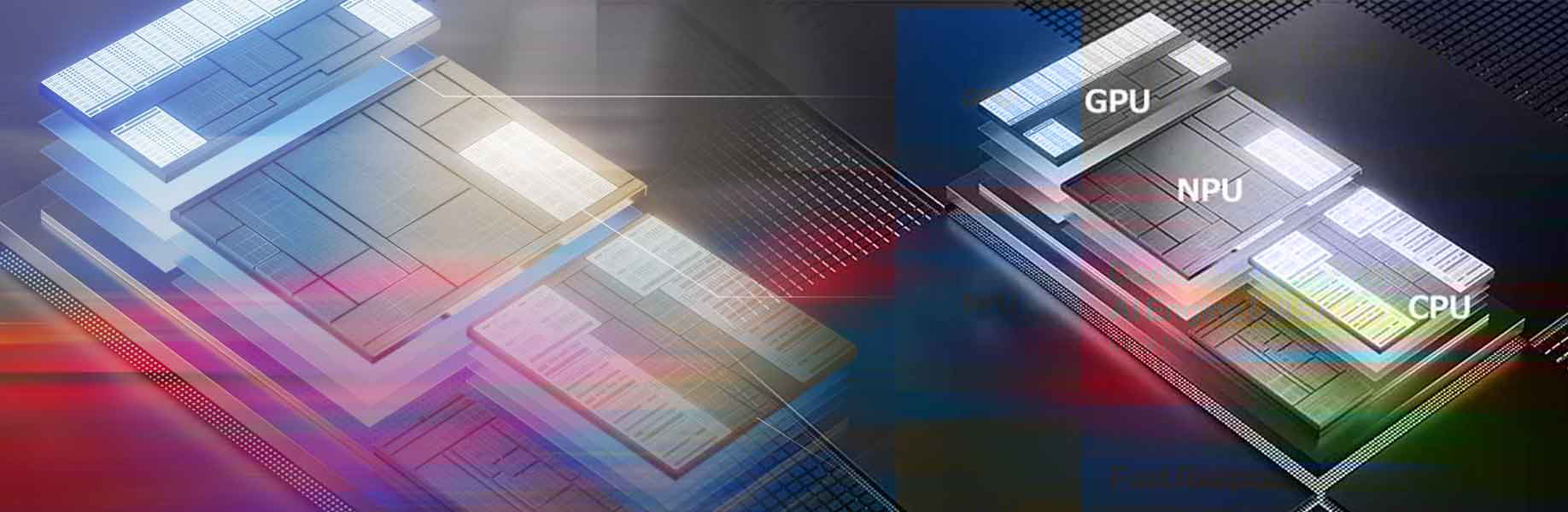
News Jul 9, 2025 New NPU technology boosts AI performance A breakthrough in low-power, high-efficiency neural processing for generative AI clouds. Giulio Prisco 2 min read
News Jan 29, 2026 New design for orbital data centers Penn engineers propose solar-powered systems in space that use tethers for stable orientation, aiming to handle growing AI demands while reducing Earth's energy and water use. Giulio Prisco 2 min read