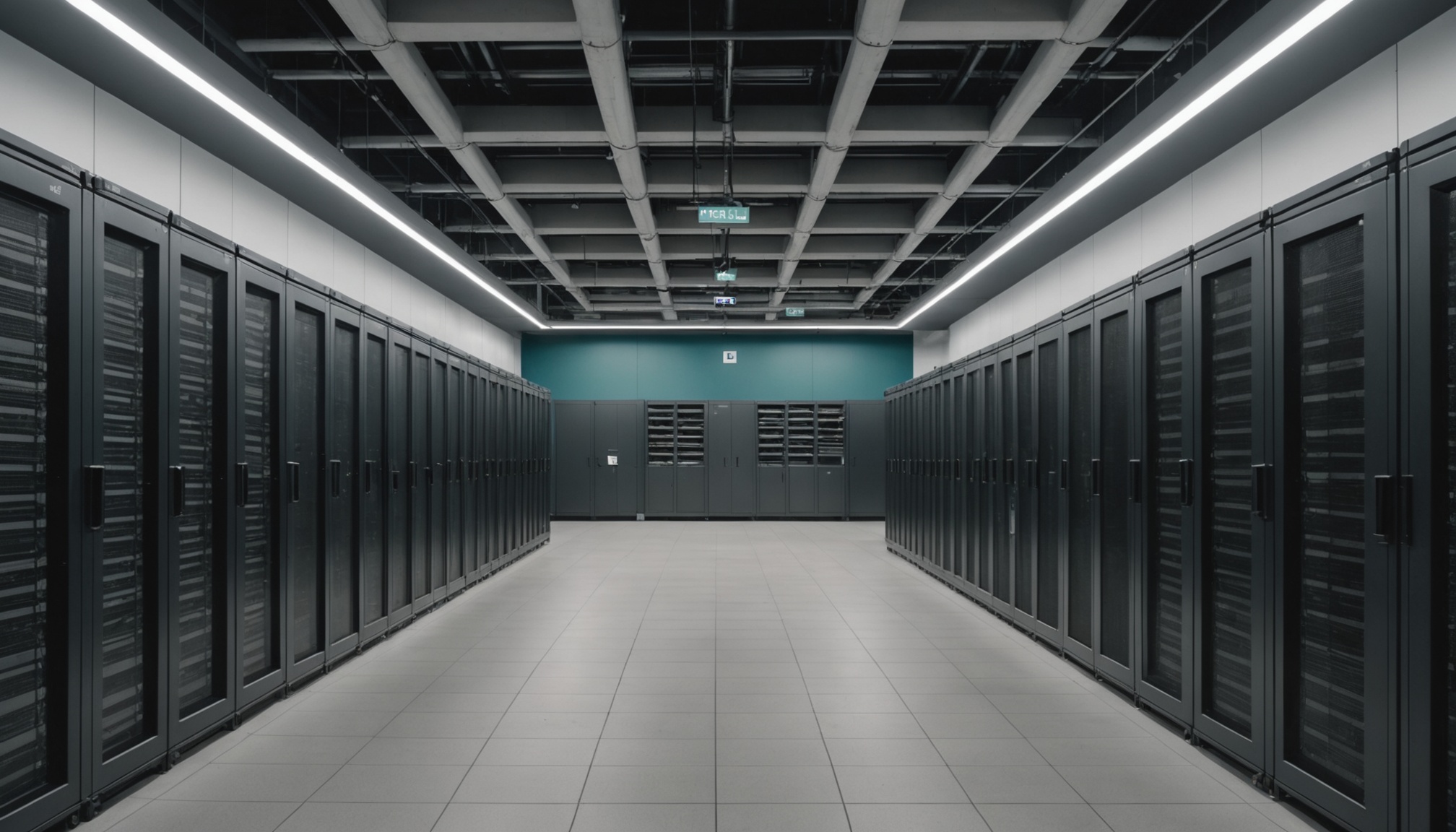


Meta has unveiled Prometheus, a massive AI supercluster designed to push the boundaries of what is possible with artificial intelligence training. The project, located at the company's New Albany, Ohio data center, represents the largest infrastructure investment in Meta's history.
The scale of Prometheus
Prometheus currently comprises hundreds of thousands of GPUs distributed across multiple interconnected buildings. When fully built out, the supercluster will contain roughly one million GPUs - a figure that would make it one of the largest AI training systems on Earth. The GPUs are connected by miles of fiber optic cable and function as a single unified computing engine.
The first phase of Prometheus is already operational. Meta used it to train its Muse family of foundational AI models - including Muse Wonder, a frontier model designed for personal and professional agentic tasks. The company reports achieving more than 85% ''goodput'' (useful work performed) during pre-training runs and over 90% during reinforcement learning runs.
The hardware inside Prometheus spans multiple generations of NVIDIA technology. The Catalina platform uses NVIDIA's GB200 NVL72, which packs 72 Blackwell GPUs into a unified domain with 13.4 terabytes of high-bandwidth memory and 720 peak petaflops of computing power. The newer Clemente platform upgrades to GB300 NVL72 with 20.7 terabytes of memory and over one exaflop of peak compute.
Why this infrastructure matters
Training the most advanced AI models requires extraordinary computational resources. A single training run can involve tens of thousands of GPUs running in lockstep for weeks or months. Any interruption - a hardware failure, a network hiccup, a software bug - can waste millions of dollars worth of computing time.
Meta has focused heavily on reliability. The company reports a mean time between interruptions of roughly 47,000 GPU-hours for early training runs, with updates pushing this above 54,000 GPU-hours. This stability allows researchers to attempt larger models and longer training runs than were previously practical.
The announcement reflects a broader trend: the largest technology companies are racing to build specialized infrastructure for AI. The scale of these projects - gigawatts of power, millions of processors, continent-spanning networks - is transforming how data centers are designed and operated. For Meta specifically, Prometheus provides the foundation for its ambitions in artificial general intelligence and its competition with OpenAI, Google, and others in the frontier model space.