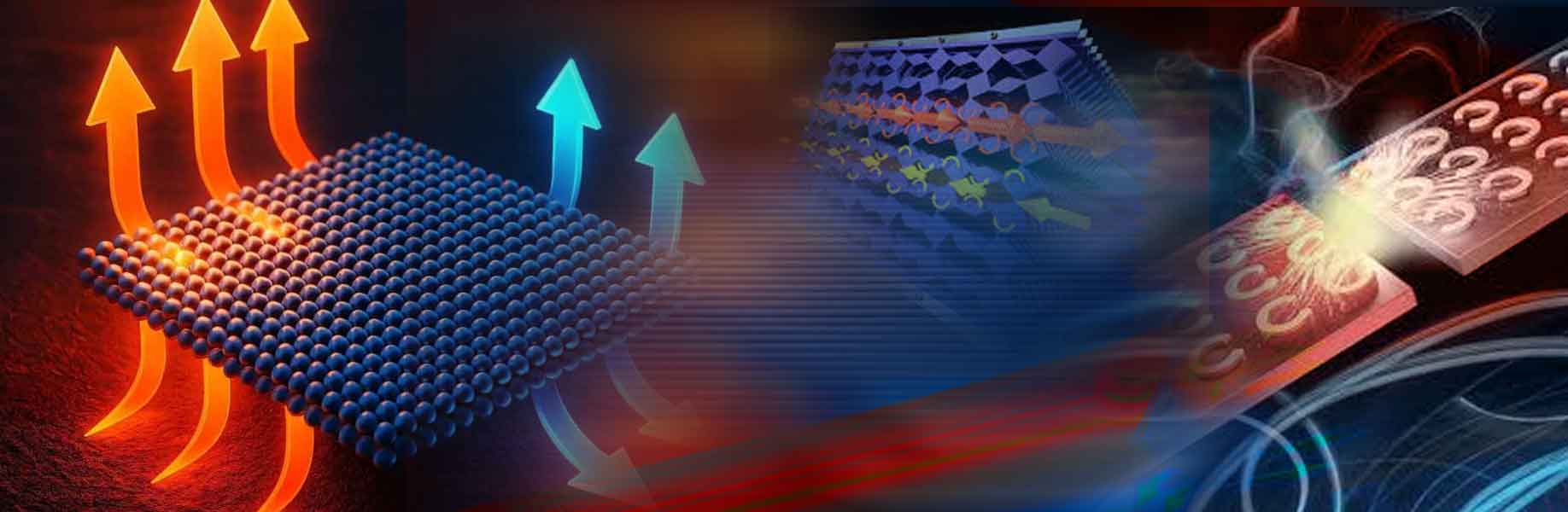

Heat behaviors change at small scales, and scientists are learning how to use this change. A new study published in Nature shows that heat can be controlled far more powerfully than before with carefully designed artificial materials. The research comes from Carnegie Mellon University along with Stanford University and Purdue University. It gives one of the clearest experimental proofs yet that heat movement can be actively planned and made stronger at the smallest scales.
At the center of the discovery is a process called near-field radiative heat transfer. This occurs when two objects sit just a few hundred nanometers apart. In this situation, heat does not simply radiate outward in the usual way. Instead, it can cross the narrow gap through electromagnetic waves, letting far more energy flow between the objects than at larger distances.
Scientists had known about this effect for years but had not shown in experiments how to push it further with artificial structures until now. The researchers built metamaterials for the test, created with tiny repeating patterns that interact with energy in precise ways. They placed thin membranes covered with microscopic gold structures face to face across a nanoscale gap. This arrangement increased heat transfer by as much as four times compared to similar setups without the special patterns. The result goes well beyond what traditional physics predicts at larger distances.
How the new system works
The gold structures interact with natural energy waves on the material surfaces known as surface phonon polaritons. These are special vibrations that carry heat energy. The interaction creates a resonance effect that lets energy move more freely and efficiently across the gap. The structures and the material surfaces work together to strengthen the heat flow.
This advance could help manage heat in shrinking electronic devices such as computer chips, where overheating is a major challenge. It may also improve thermophotovoltaic systems that turn heat directly into electricity. In sensing technologies, stronger and more controllable heat signals could lead to better infrared detectors for environmental monitoring and security. The work remains at the laboratory stage under controlled conditions, but it moves the idea of engineering heat with the same precision as electricity or light closer to practical use.