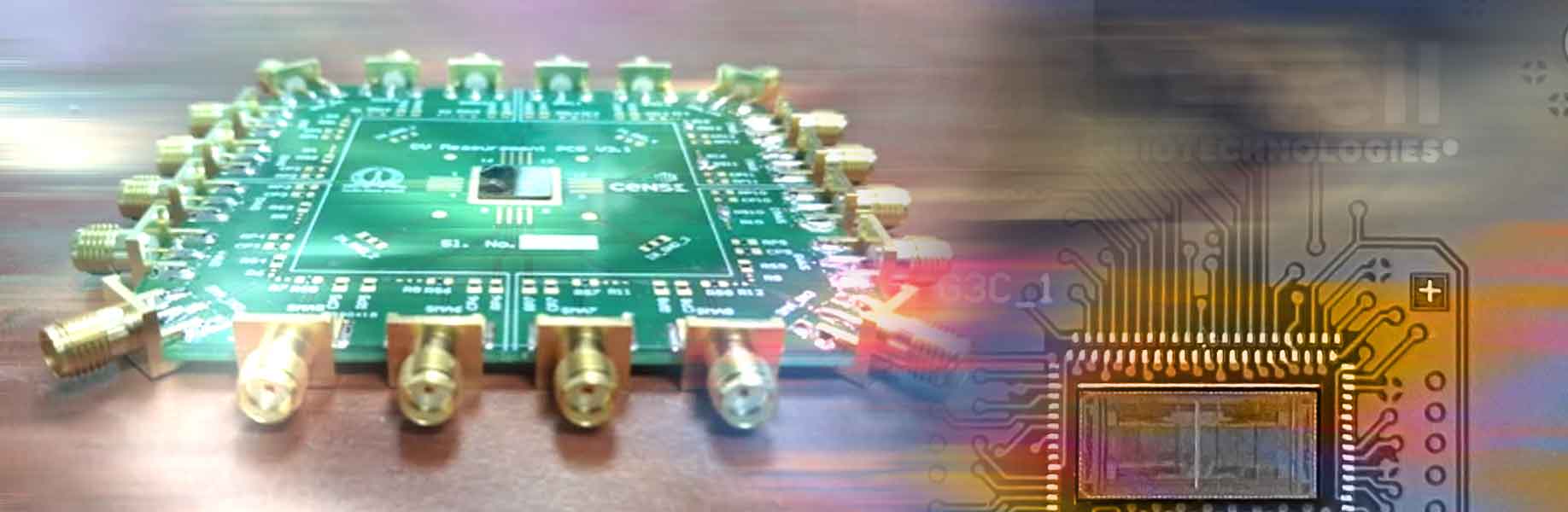

For more than 50 years, researchers have tried to replace silicon - the main material in computer chips - with molecules to make smaller, more flexible electronics. However, in real devices, molecules interact in complicated ways: electrons move around, ions shift positions, and small changes in structure can cause big, unpredictable effects. This made it hard to control them reliably.
At the same time, neuromorphic computing - systems designed to mimic how the brain works - has aimed to find materials that can store data, process it, and learn all in one place, without separate parts. Most current systems use oxide materials that switch like filaments, but they act more like machines copying brain functions rather than truly adapting like living matter.
A recent study from the Indian Institute of Science, published in Advanced Materials, suggests these two fields can now come together.
Versatile molecular devices
The researchers made small devices from specially designed ruthenium complexes - molecules centered on ruthenium atoms surrounded by ligands (attached groups that influence behavior) and ions. By adjusting these elements, the same device can act in different ways depending on electrical signals: as memory to store data, a logic gate to make decisions like in computers, a selector to choose signals, an analog processor for smooth varying data, or an electronic synapse that learns from experience. This flexibility comes from how electrons flow and ions rearrange, creating many stable states across a wide range of electrical conductance.
To explain this, the researchers built a new theory using many-body physics and quantum chemistry. It predicts device performance from molecular structure, showing how oxidation and reduction in molecules, plus ion movements, control switching speed and stability. This allows combining memory and computing in one material, ideal for neuromorphic hardware where learning happens naturally in the substance itself. The devices could integrate with silicon chips for smarter, more energy-efficient artificial intelligence (AI) systems, turning chemistry into a core part of computation.