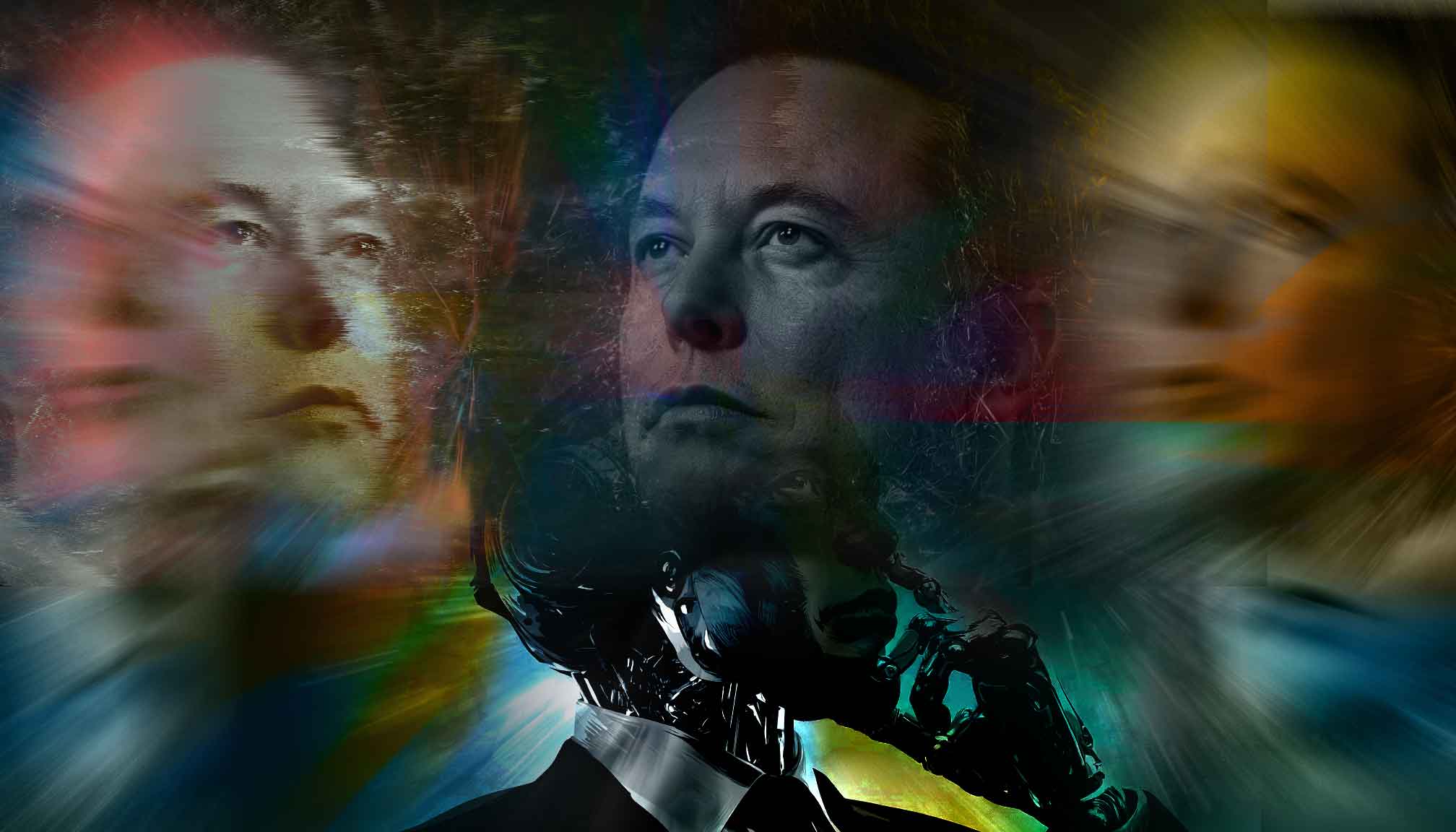

Elon Musk's business empire is pursuing an unusually dense portfolio of advanced technology projects this year, spanning brain implants, space exploration, robotics, semiconductor manufacturing, and artificial intelligence infrastructure, International Business Times reports. The initiatives, spread across Neuralink, SpaceX, Tesla, and the recently consolidated xAI, represent significant ongoing investments in interconnected technologies that Musk hopes will reshape multiple industries simultaneously.
Key projects across Musk's companies
Neuralink is scaling up production of its brain-computer interface device, which uses ultra-fine threads to read neural signals. The company received regulatory clearance for human trials and had implanted twelve patients worldwide as of September 2025. In 2026, Neuralink aims to transition toward high-volume manufacturing and nearly fully automated surgical implantation. A separate project called Blindsight, which stimulates the visual cortex to create perceptions of light and shapes for completely blind patients, is scheduled for its first human trial this year.
SpaceX is developing its next-generation Starship V3 spacecraft, equipped with new Raptor V3 engines. The company plans orbital propellant transfer tests in 2026, a technique that would allow spacecraft to refuel in space and potentially enable long-distance missions to the moon or Mars. SpaceX is also deploying next-generation Starlink V3 satellites designed to deliver improved internet connectivity.
Tesla has begun mass production of its Optimus Gen 3 humanoid robot and Cybercab autonomous vehicle. The company's Robotaxi service is already operating in Dallas and Houston, using Full Self-Driving software that Tesla is working to expand into fully unsupervised operation. Tesla continues producing the Semi truck and expanding its Megapack energy storage systems for electrical grid applications.
A semiconductor initiative called Terafab aims to give Musk's companies greater control over their chip supply chains. An advanced technology fabrication facility in Austin, Texas, will manufacture and test various chip types. A related arrangement involves Intel producing chips at a separate Terafab facility for Tesla, SpaceX, and xAI, combining logic, memory, packaging, and testing operations. These chips are intended for use in Optimus robots, Cybercabs, and space-based data centers SpaceX is developing.
In February 2026, SpaceX acquired xAI. xAI is expanding its Colossus supercomputer cluster in Memphis, Tennessee, toward nearly two gigawatts of training capacity. The Grok AI product line remains distributed through Musk's social media platform X.
Musk's companies increasingly overlap across artificial intelligence, robotics, vehicles, communications, and infrastructure, reflecting a deliberate strategy to build an interconnected technology ecosystem rather than operating independent business lines.