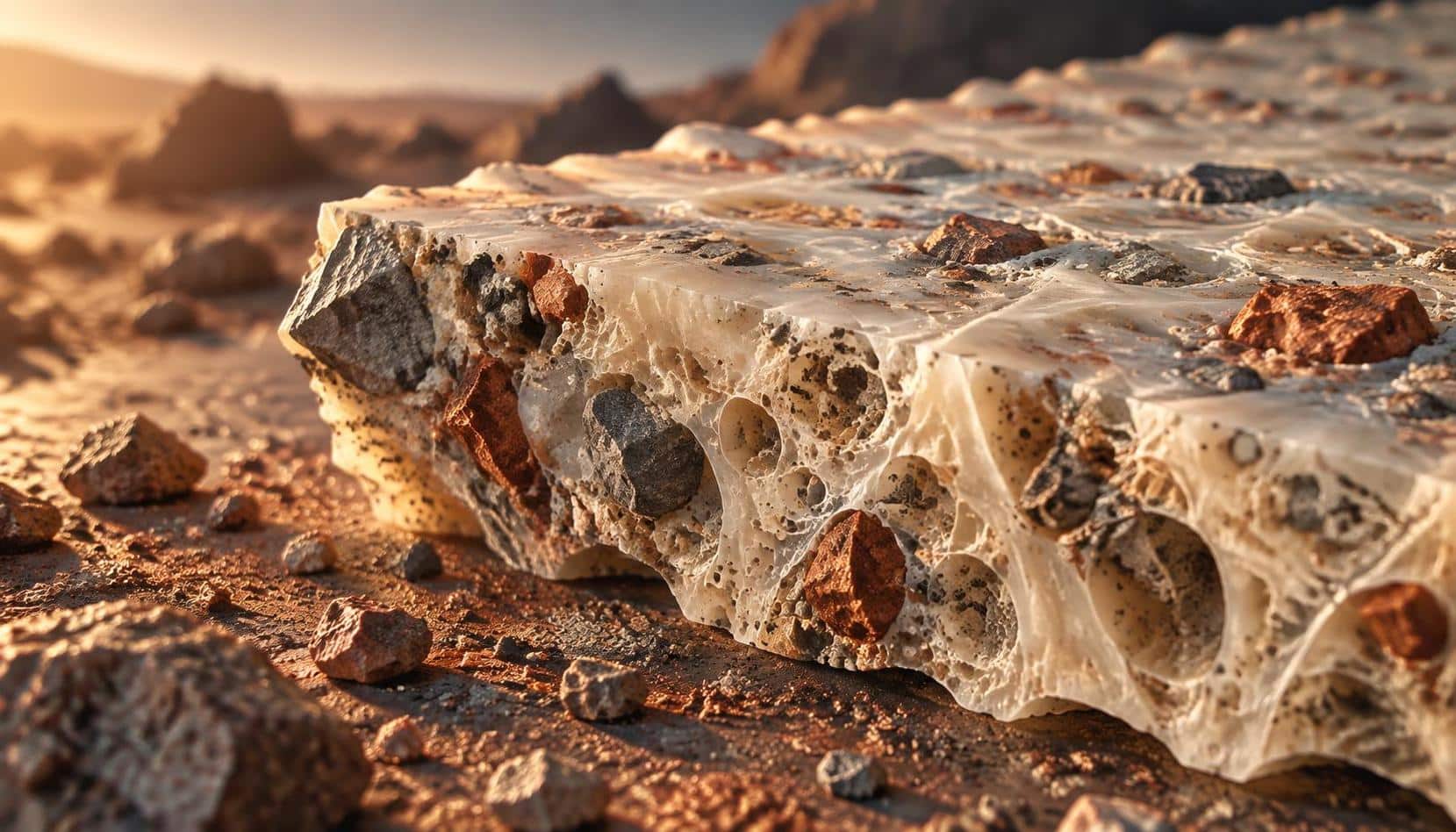

NASA researchers have developed a composite that combines biodegradable plastic with simulated lunar and Martian dust, aiming to make equipment for future space habitats from resources available at the destination. The agency described the laboratory work on September 29.
At NASA’s Glenn Research Center, chemical engineer Allison Christy and her team found that adding the dust simulants strengthened the plastic and improved processing. Changing the dust type and quantity let them adjust its properties.
The work shares a practical goal with earlier research into reinforcing composites with lunar dust: reducing dependence on supplies shipped from Earth. A separate effort exploring fungi-based construction materials also asks whether biology and local resources can help produce useful building components beyond Earth.
The plastic could be produced by bacteria fed with crew waste or carbon dioxide. Potential applications include brackets, tools and furniture inside habitats, rather than structures already proven for exposed lunar conditions.
Samples are undergoing extreme-temperature testing at Glenn, and others are scheduled for exposure outside the International Space Station through MISSE-23. The results do not yet establish that the material can be manufactured or used reliably on the Moon or Mars.