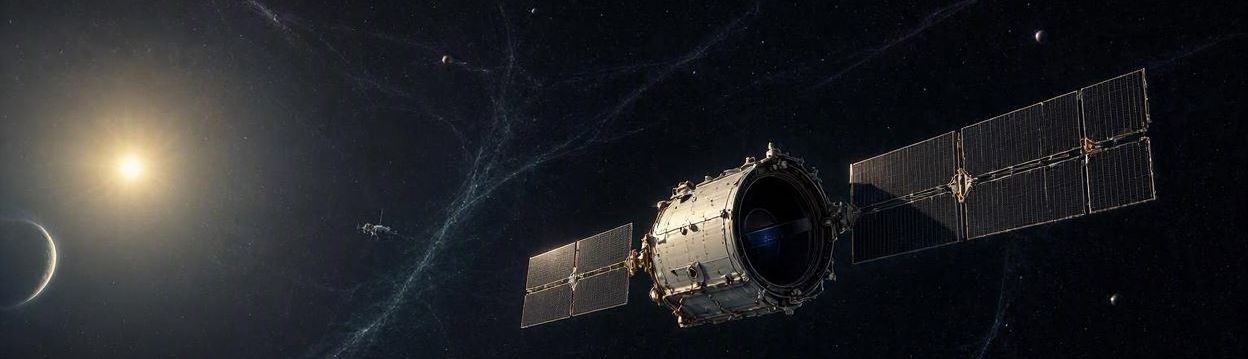

NASA's newest flagship observatory, the Nancy Grace Roman Space Telescope, successfully launched into space on Sunday, August 30, 2026. The mission lifted off at 7:26 a.m. Eastern Time aboard a SpaceX Falcon Heavy rocket from Launch Complex 39A at NASA's Kennedy Space Center in Florida.
The spacecraft is now on a three-month journey to its final orbit approximately one million miles from Earth. Once operational, Roman will study dark energy, dark matter, and exoplanets with a field of view at least 100 times larger than Hubble's. The observatory will generate over 500 terabytes of data annually, the highest data rate of any NASA astrophysics mission to date. Machine learning, artificial intelligence, and citizen scientists will help sift through the data.
The ground control team at NASA's Goddard Space Flight Center began receiving telemetry data from Roman seven minutes after launch. The Falcon Heavy rocket performed as expected, separating from the observatory 31 minutes into the flight. The mission team confirmed the successful deployment of the observatory's solar panels and lower instrument sun shade one hour and 23 minutes after launch. NASA anticipates releasing Roman's first high-resolution images by early 2027. "Roman will be a discovery machine that will bring us closer than ever before to answering humanity's most profound questions about our cosmic history," said Nicky Fox, associate administrator for NASA's Science Mission Directorate.
The Roman Telescope is part of a broader strategy to accelerate American leadership in space, with the mission representing "a robust science schedule featuring the Nancy Grace Roman and Dragonfly missions" that signals a fundamental shift toward industrial urgency and sustained advantage in the final frontier.