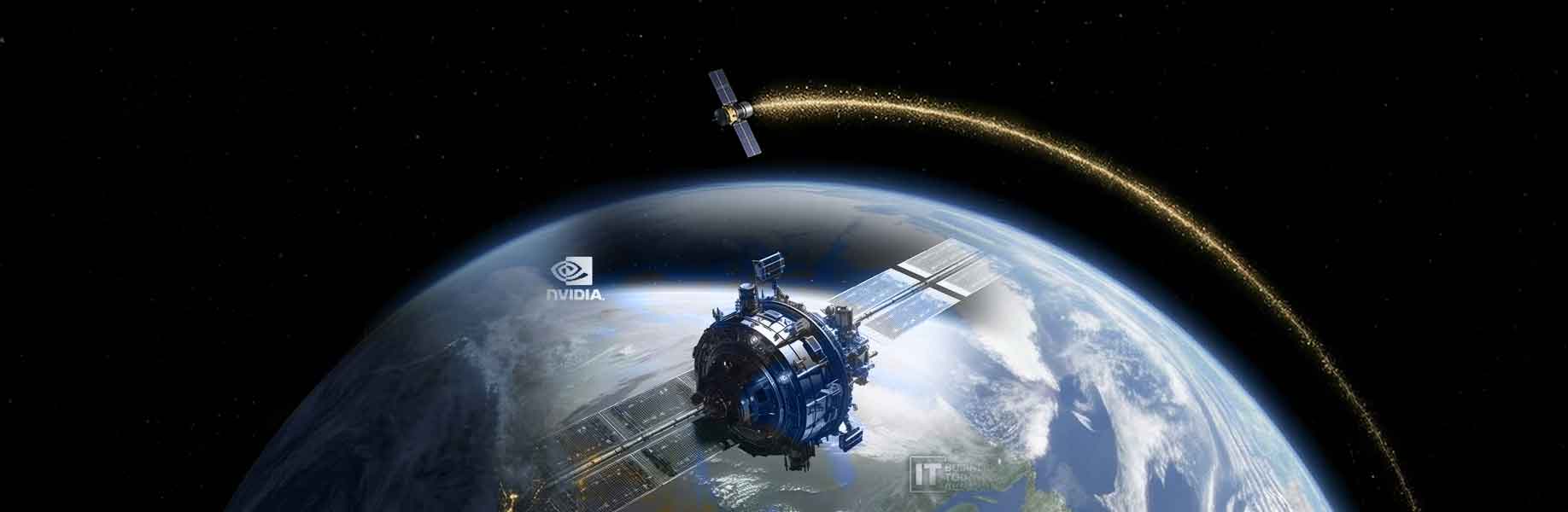

NVIDIA has introduced new computing platforms that bring advanced artificial intelligence (AI) capabilities to space. These tools allow AI to run directly on satellites and in orbital data centers, where size, weight, and power limits make traditional systems difficult to use. The goal is to process data where it is created, reducing delays and supporting more complex space tasks.
The NVIDIA Space-1 Vera Rubin Module stands out as a key new product. It uses the Rubin GPU, which provides up to 25 times more AI computing power for space-based tasks than the earlier H100 GPU. This enables fast AI inferencing in orbit for applications like advanced geospatial intelligence (detailed analysis of Earth observation data) and autonomous spacecraft operations.
Other platforms include NVIDIA IGX Thor and Jetson Orin. These deliver efficient AI processing, image sensing, and data handling in compact, low-power designs suitable for edge computing (processing data close to its source) on satellites. On the ground, the NVIDIA RTX PRO 6000 Blackwell Server Edition GPU speeds up analysis of large image archives by up to 100 times compared to older CPU-based methods.
Industry adoption and benefits
Several space companies are already using these platforms. Aetherflux applies them for solar-powered AI in orbit. Kepler Communications uses Jetson Orin to make satellite networks smarter for faster, secure data routing. Planet integrates the technology to turn daily Earth images into quick insights with AI models. Sophia Space builds modular computing platforms for customer applications in space, while Starcloud creates orbital data centers for large-scale AI workloads, reducing the need to send all data back to Earth.
These advances support real-time sensing, autonomous navigation, and on-orbit analytics. They also improve ground-based tasks such as disaster response, climate monitoring, and infrastructure tracking by quickly processing vast amounts of satellite imagery. The IGX Thor, Jetson Orin, and RTX PRO 6000 GPU are available now, with the Space-1 Vera Rubin Module coming later. This work extends high-performance AI from Earth into space, helping missions become more independent and responsive.