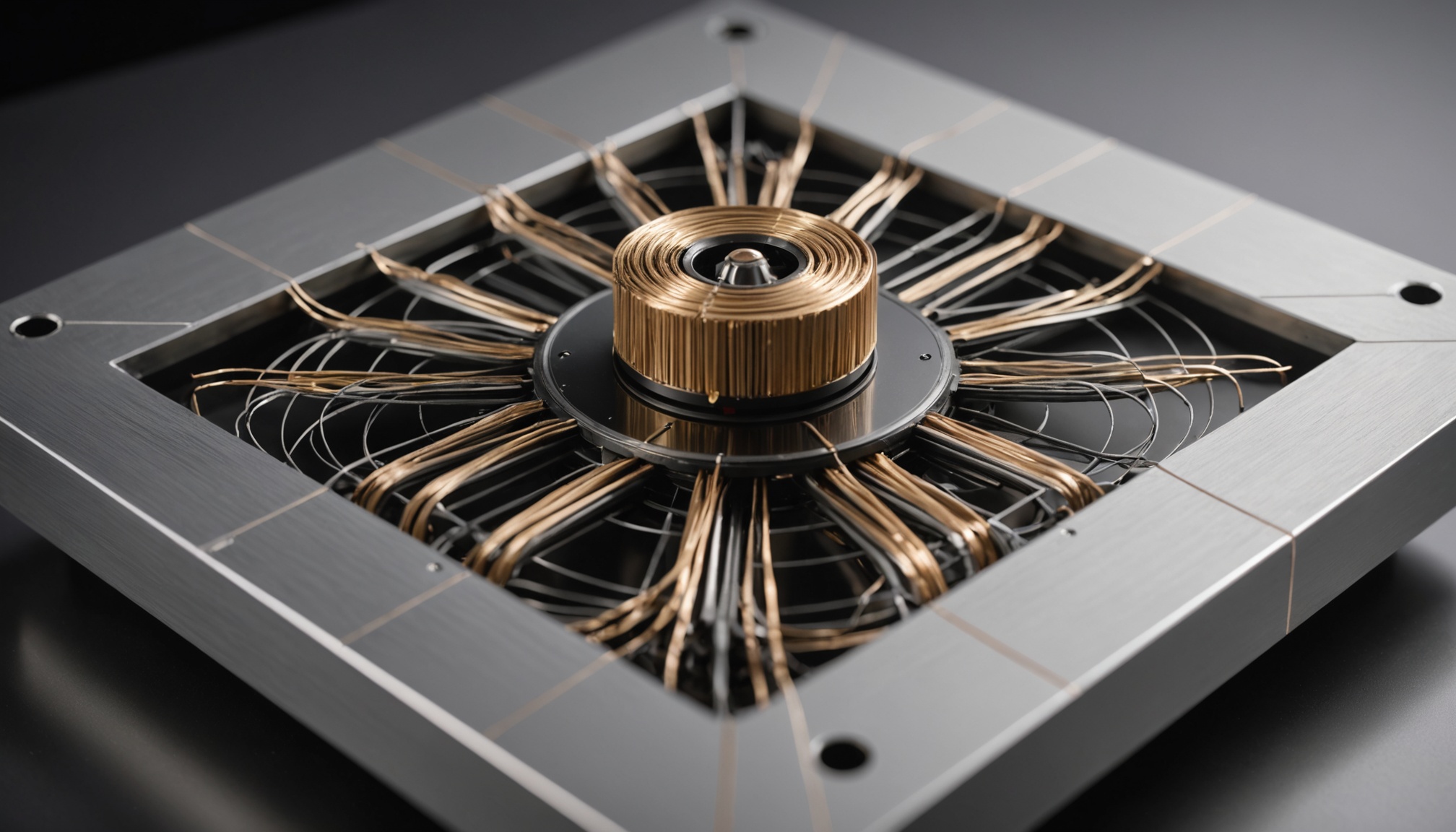


Physicists at ETH Zurich in Switzerland have built a new kind of quantum computer that stores information in tiny mechanical vibrations. The device works a little like a guitar: just as a guitar string produces different notes depending on how it vibrates, small components on the chip vibrate in different patterns, and each pattern holds a piece of information. The work was published in Science and described in a news release.
In the new quantum chip, a superconducting qubit - the basic unit of quantum information in this system - acts as the processor, while components called mechanical resonators serve as the memory. This is part of what gives quantum computers their potential power.
Smaller parts, longer-lasting memory
Most quantum computers today store memory in electromagnetic devices, which are well understood but take up a lot of space. Mechanical resonators are much smaller, and they can vibrate in many different modes, or patterns, so the same hardware can hold more information at once. They also keep fragile quantum states stable for longer before the information fades.
To prove the idea works, the team ran real quantum computations on the chip. They carried out the quantum Fourier transform, a basic procedure needed by many quantum algorithms, and a period-finding routine built on it. As described in the research paper, the system also supports a universal gate set, meaning it can, in principle, perform all the steps required for any quantum computation.
The result matters because one of the biggest obstacles to practical quantum computers is fitting enough memory into a small, controllable device. According to the ETH Zurich announcement, this is the first experimental demonstration that mechanical resonators can work together with superconducting qubits to carry out genuine quantum calculations. The technology is still at an early stage, and the team must now show it works reliably in larger systems. If it scales, vibrating memory could help make future quantum machines smaller, more powerful, and better at preserving information.