Researchers at AWS and the University of Wisconsin–Madison have developed a training method that helps AI agents turn completed work into reusable skills, improving performance while reducing the effort required for later tasks.
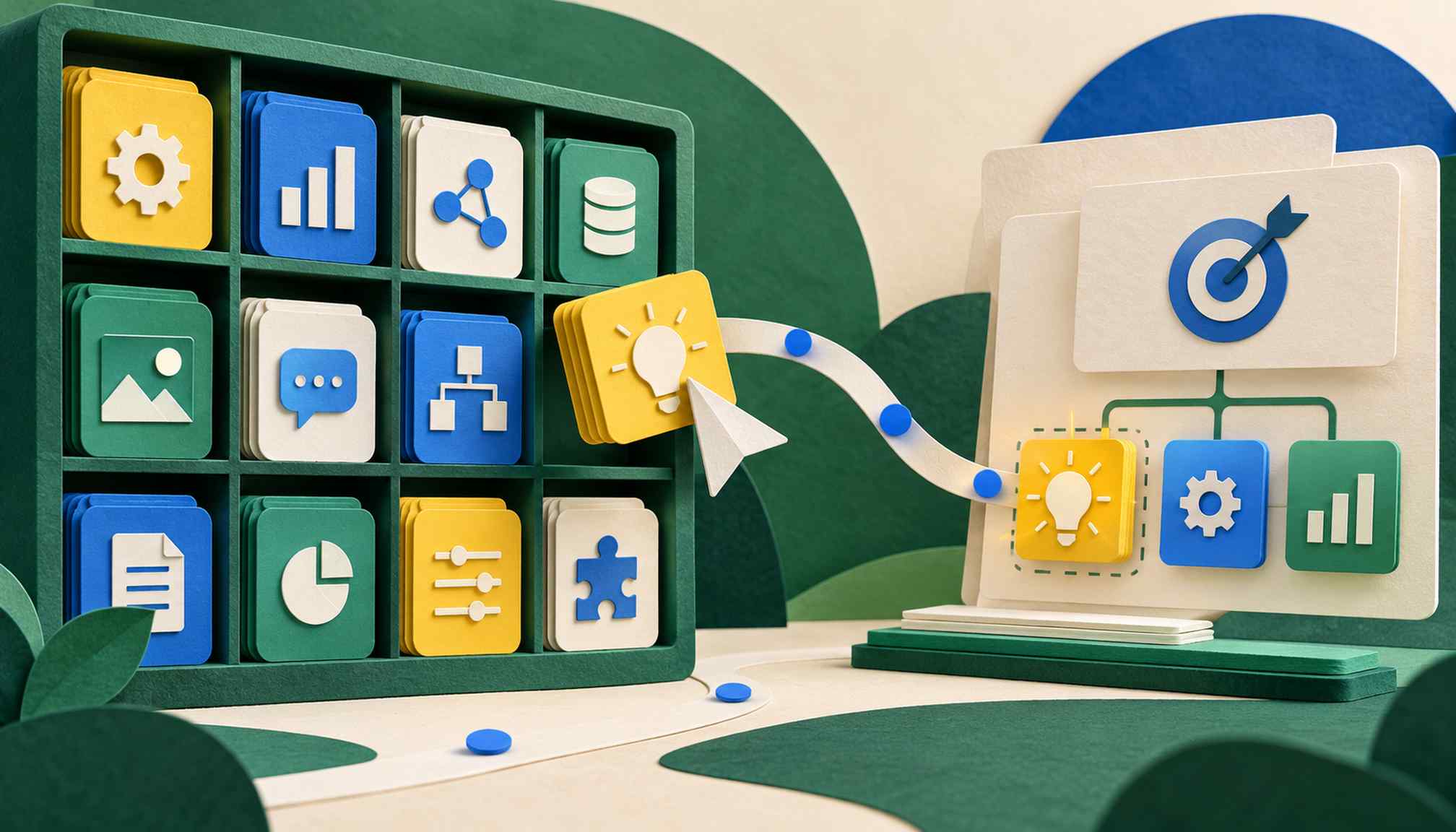
The approach, called SAGE, was published in the ACL 2026 proceedings in July. It combines reinforcement learning with a skill library, allowing an agent to save useful action sequences and invoke them again. That idea fits a broader move toward agents equipped with procedural memory that stores executable skills rather than forcing every task to begin from scratch.
Training proceeds through chains of similar tasks. Skills created during earlier attempts remain available for subsequent ones, while a reward encourages their generation and reuse. The system first receives supervised training from expert examples before reinforcement learning. Related work has explored agents that build and refine their own skills and workflows through repeated experience, suggesting that reusable capabilities could become an important part of longer-running agent systems.
On AppWorld’s normal test split, scenario completion rose from 51.8% for the GRPO baseline to 60.7% with SAGE, an increase of 8.9 percentage points. Average interaction steps fell by about 26%, while generated tokens dropped by 59%.
Those savings address another challenge in persistent agents: keeping useful experience without repeatedly loading large amounts of prior context. Research into consolidating agent experience into more compact reusable knowledge points toward a similar goal.
The results do not demonstrate unrestricted autonomous improvement. Skills were shared within predefined task scenarios, so whether comparable gains survive across unrelated and messier workplace tasks remains an open deployment question.