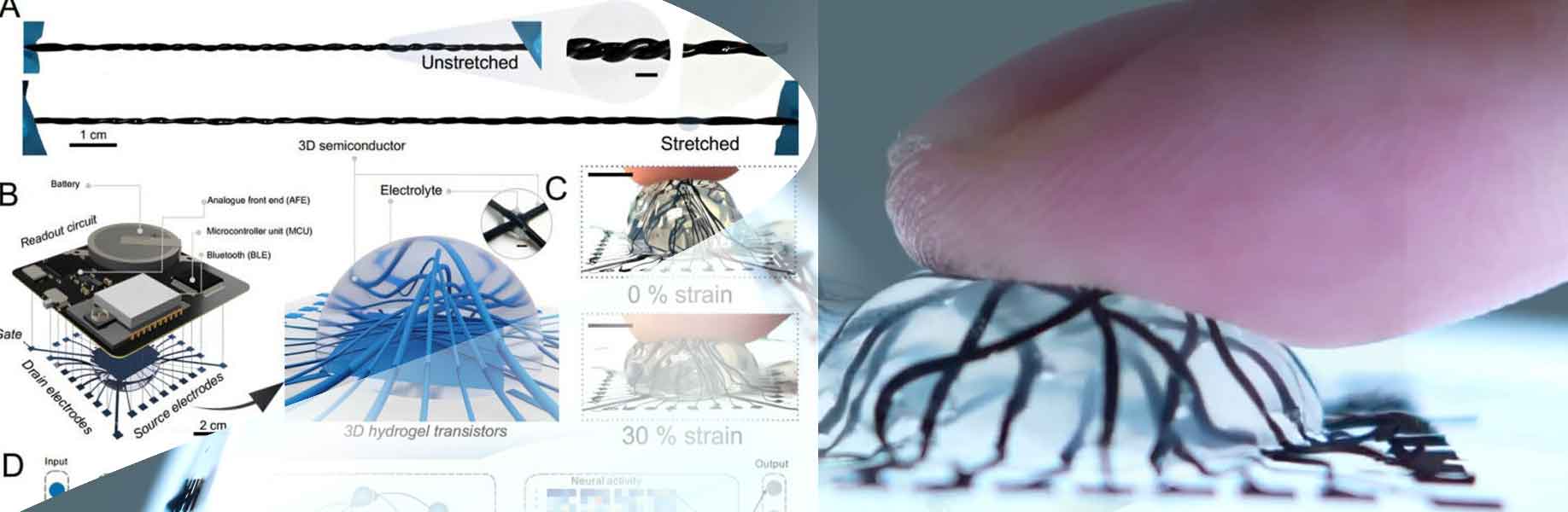

Modern electronics is based on transistors that control electrical signals. Traditional ones are made from silicon, a hard material, and are flat or two-dimensional, making them hard to combine with soft, three-dimensional living things like human tissues. Researchers at the University of Hong Kong have created the first soft, three-dimensional transistors. These new devices use special materials called hydrogel semiconductors, which are soft gels that conduct electricity and are safe for the body. They form in water through a process where parts assemble themselves into a three-dimensional shape.
This work took five years to develop. The transistors act and look like neurons. They are very thick, more than a millimeter, and can hold living cells inside them. This makes them ideal for bioelectronics, a field that mixes electronics with biology to create things like medical implants or sensors.
Merging technology and biology
The discovery means electronics can now work better with the body, leading to new tools for health. For example, it could help in neuroscience, or in making biohybrid devices that combine machines with living parts.
“This is just the beginning of a new era of bioelectronics," says research leader Shiming Zhang in a press release. "With further optimisation, such Jelly-like 3D biochips could revolutionise healthcare, education, and even daily life. We look forward to the launch of regulatory frameworks to guide the development of such groundbreaking technologies for medical uses.”
The project got funding from a special research grant to support young scientists. Overall, this advance shows how changing basic device design can open doors to safer, more natural ways to connect technology with life, potentially helping in medicine, education, and research.
The researchers have described the methods and results of this study in a paper published in Science. The paper has been selected as the cover paper of a November 2025 magazine issue.