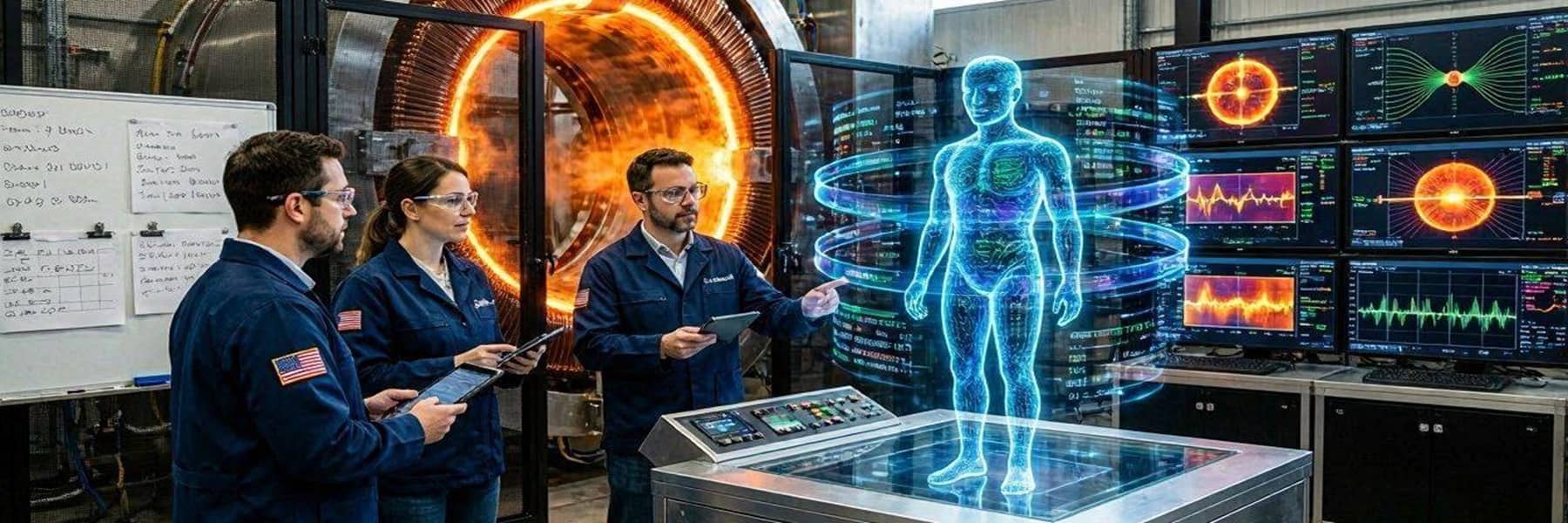

The Princeton Plasma Physics Laboratory will lead a project to develop an autonomous AI system capable of operating the high-power gyrotrons that heat plasma in fusion energy reactors, the lab announced on July 22.
The project falls under the Genesis Mission, a national initiative launched by the US Department of Energy that pools AI, supercomputing, quantum systems and advanced scientific instruments into what the agency describes as the world's most powerful integrated science discovery platform. Nearly 300 projects spanning all 50 states were selected in the first round of awards.
Principal Research Physicist Syun'ichi Shiraiwa will direct the PPPL-led effort, which targets electron cyclotron heating, a method that uses high-frequency beams to raise plasma temperatures inside magnetically confined fusion systems. The research team will build a digital twin, a virtual replica of the beam-wave interactions inside a gyrotron, to accelerate simulations and shorten the development cycle for fusion-grade heating equipment.
Collaborators on the project include researchers from Rice University, the Naval Research Laboratory, Brookhaven National Laboratory and Sophelio. PPPL will also participate in seven additional Genesis Mission projects covering areas from plasma reconnection experiments to AI-driven materials discovery for semiconductor devices.