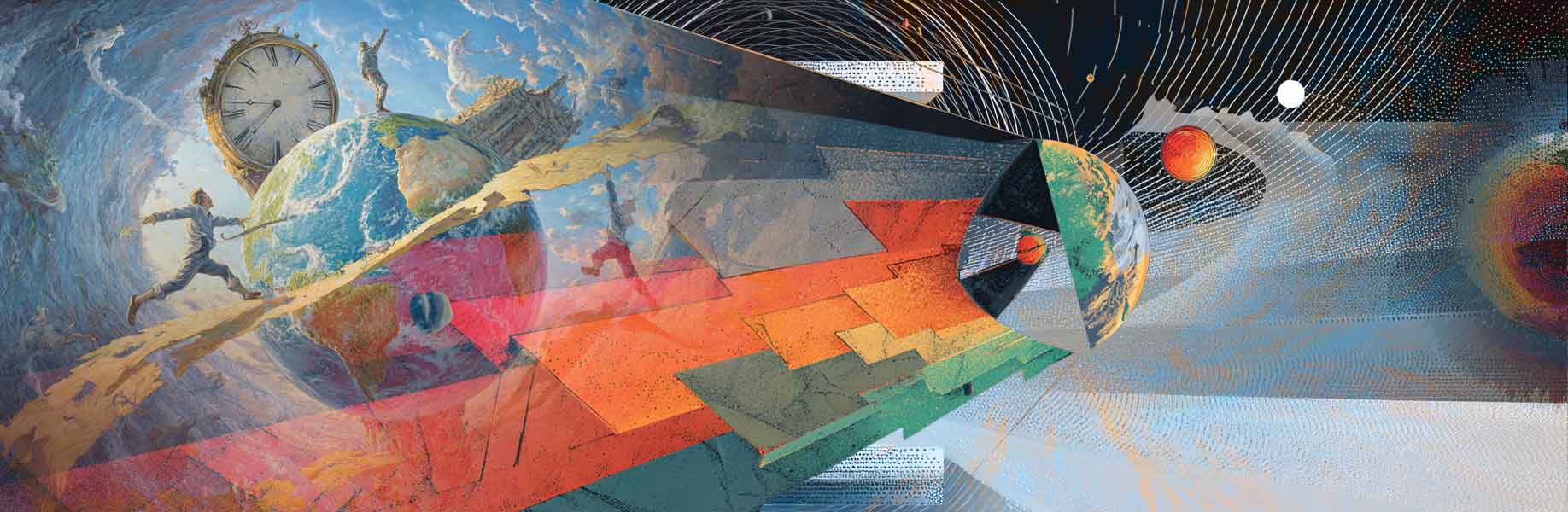

A Hypothetical Catastrophe: Exploring the Apocalyptic Consequences of a Momentary Planetary Pause
Imagine a world where the relentless spin of our planet grinds to a halt, even if just for a fleeting second. It's a thought experiment that has captivated scientists, writers, and dreamers alike, blending hard physics with the thrill of "what if." In this scenario, drawn from astrophysical insights, the Earth doesn't just slow down gradually it stops dead in its tracks before snapping back to its usual rotation. The results? Utter devastation on a scale that defies comprehension. Let's dive into the science behind this cosmic catastrophe.
The Physics of Earth's Eternal Twirl
Earth spins on its axis at a staggering speed: roughly 1,600 kilometers per hour (about 1,000 miles per hour) at the equator. This rotation is what gives us our 24-hour days, shapes our weather patterns, and even influences the planet's bulging shape. But what if that spin ceased abruptly? According to the laws of physics, particularly inertia Isaac Newton's first law stating that objects in motion stay in motion unless acted upon by an external force everything on Earth's surface would continue hurtling eastward at that breakneck velocity.
Astrophysicist Neil deGrasse Tyson succinctly captures the horror: *It would kill everyone on Earth. People would be flying out of windows, and that would be just a bad day on Earth.* This isn't hyperbole; it's grounded in the conservation of angular momentum. When the ground beneath us stops, we don't. The equator would experience the worst, with polar regions faring slightly better due to slower rotational speeds, but no corner of the globe would escape unscathed.
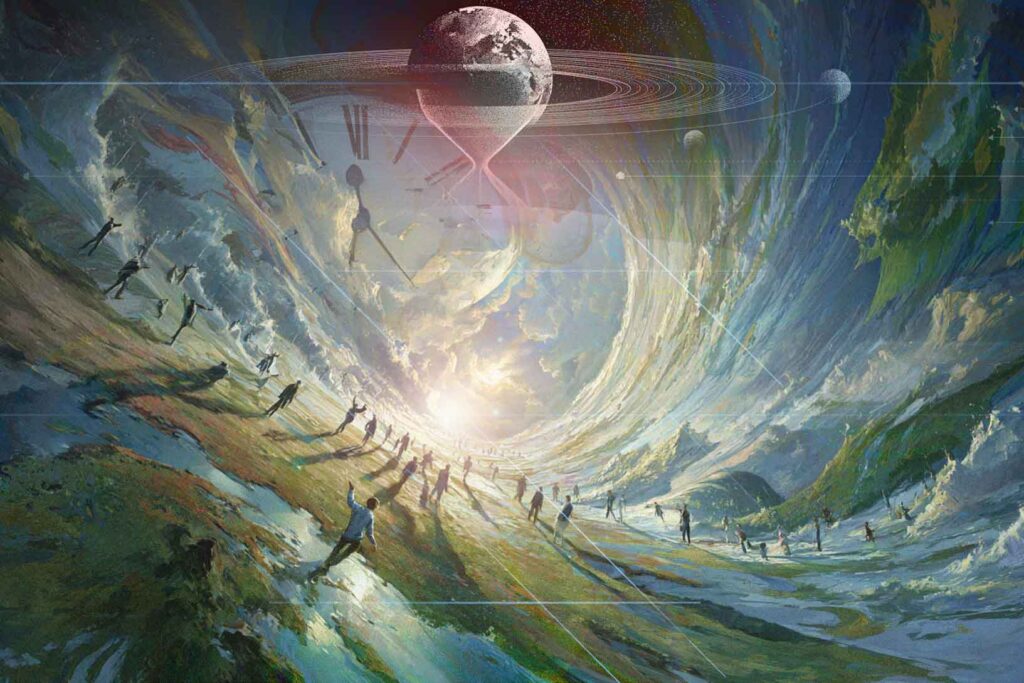
The Immediate Onslaught: Winds, Waves, and Widespread Ruin
In that single second of stillness, the atmosphere untethered from the solid Earth would keep whipping around at supersonic speeds, clocking in at around Mach 1.3 (over 1,000 mph). Picture a barrage of winds stronger than a thousand hurricanes, scouring the landscape, uprooting trees, and turning loose objects into deadly projectiles. Buildings would shatter, cities would be leveled, and the air itself would become a weapon of mass destruction.
The oceans, too, would rebel. Disrupted from their rotational equilibrium, massive volumes of water would slosh eastward, birthing colossal tsunamis that dwarf anything in recorded history. Coastlines would be obliterated as these walls of water crash inland, flooding vast swaths of land and erasing communities in moments. On land, the sudden momentum shift would trigger cataclysmic earthquakes, as the Earth's crust buckles under the strain, fracturing tectonic plates and unleashing seismic waves that ripple across continents.
Life as we know it? Eradicated. Humans, animals, and even vehicles would be flung like ragdolls, colliding with barriers or soaring into the sky. Survival odds: near zero, especially outside the poles where speeds are minimal.
The Double Whammy: When Rotation Resumes
But the nightmare doesn't end with the stop. After that one-second pause, Earth's resumption of spin would deliver a second jolt an abrupt acceleration back to full speed. This reversal could compound the chaos, slamming displaced debris, water, and air masses in the opposite direction. More tsunamis, additional quakes, and intensified atmospheric turmoil would follow, turning an already apocalyptic event into a planetary reset button.
Long-term ripples might include disruptions to Earth's gravitational field, potentially tweaking the Moon's orbit and altering tides forever. While natural processes like tidal friction from the Moon slowly lengthen our days (by about one second every 50,000 years), a sudden intervention like this is purely hypothetical thankfully impossible without some cosmic interference.
Why This Thought Experiment Matters in Our AI-Driven World
In an era where AI simulations allow us to model such doomsday scenarios with unprecedented accuracy, pondering Earth's halted spin isn't just morbid curiosity. It reminds us of the fragile balance sustaining life on our blue marble, echoing broader discussions on planetary stability amid climate change and technological risks. Could AI help predict or mitigate real-world rotational anomalies, like those from massive earthquakes? The speculation opens doors to innovative thinking, blending physics with futuristic tech.
Is there a cosmic lesson here, a "ghost in the planetary machine" urging us to appreciate the spin that keeps us grounded? As philosopher Thomas Nagel might ask in a different context: What is it like to be a planet in pause? For Earth, it's a brief flirtation with oblivion one we're grateful remains in the realm of imagination.