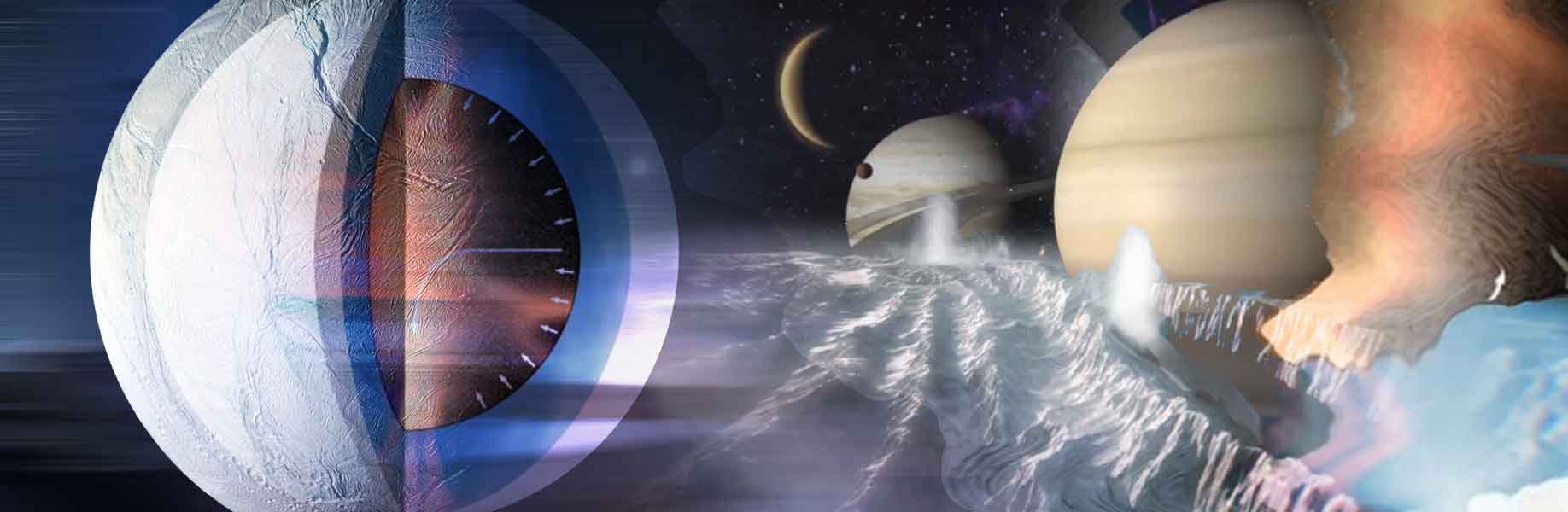

Scientists have found complex organic molecules from Enceladus, a moon of Saturn. These molecules were detected in data from the Cassini spacecraft, which explored Saturn and its moons. The discovery suggests that complicated chemical reactions happen in the ocean hidden under the moon's icy surface. Some of these reactions might lead to even more advanced molecules that could relate to biology. The results add support for a new mission by the European Space Agency to study Enceladus closely, perhaps by orbiting it or landing on its surface.
Cassini first spotted signs of the underground ocean in 2005. Water spray from surface cracks shoot ice grains into space. Earlier studies found simple organic molecules in Saturn's rings, including precursors for amino acids. Amino acids are molecules that make up proteins, which are essential for life. But those molecules had been in space for hundreds of years and changed by radiation.
Fresh insights from fast impacts
To get a clearer picture, researchers looked at data from 2008 when Cassini flew through the water spray. The grains hit the spacecraft's Cosmic Dust Analyzer at high speed, about 18 kilometers per second. The high speed helped reveal hidden signals because at lower speeds, water clusters can mask organic molecules.
The analysis showed that familiar organic molecules from the E ring also appear in fresh grains, confirming they come from the ocean. It also uncovered new types, like aliphatic compounds, which are chain-like carbon structures, and others with nitrogen and oxygen. On Earth, these play roles in reactions leading to life-related molecules.
This boosts Enceladus as a place that might support life, with liquid water, energy sources, key chemicals, and now complex organics. Even if no life is found, it would raise questions about why not in such conditions. More data analysis is ongoing, and the findings will help design instruments for future missions to sample the moon directly.
This research is published in Nature Astronomy.