

Researchers in Germany have observed for the first time that the location and the time evolution of an electron cannot be measured with arbitrary precision simultaneously. The researchers call this boundary the space-time limit, and they report their results in Nature Photonics, as described in the University of Regensburg announcement.
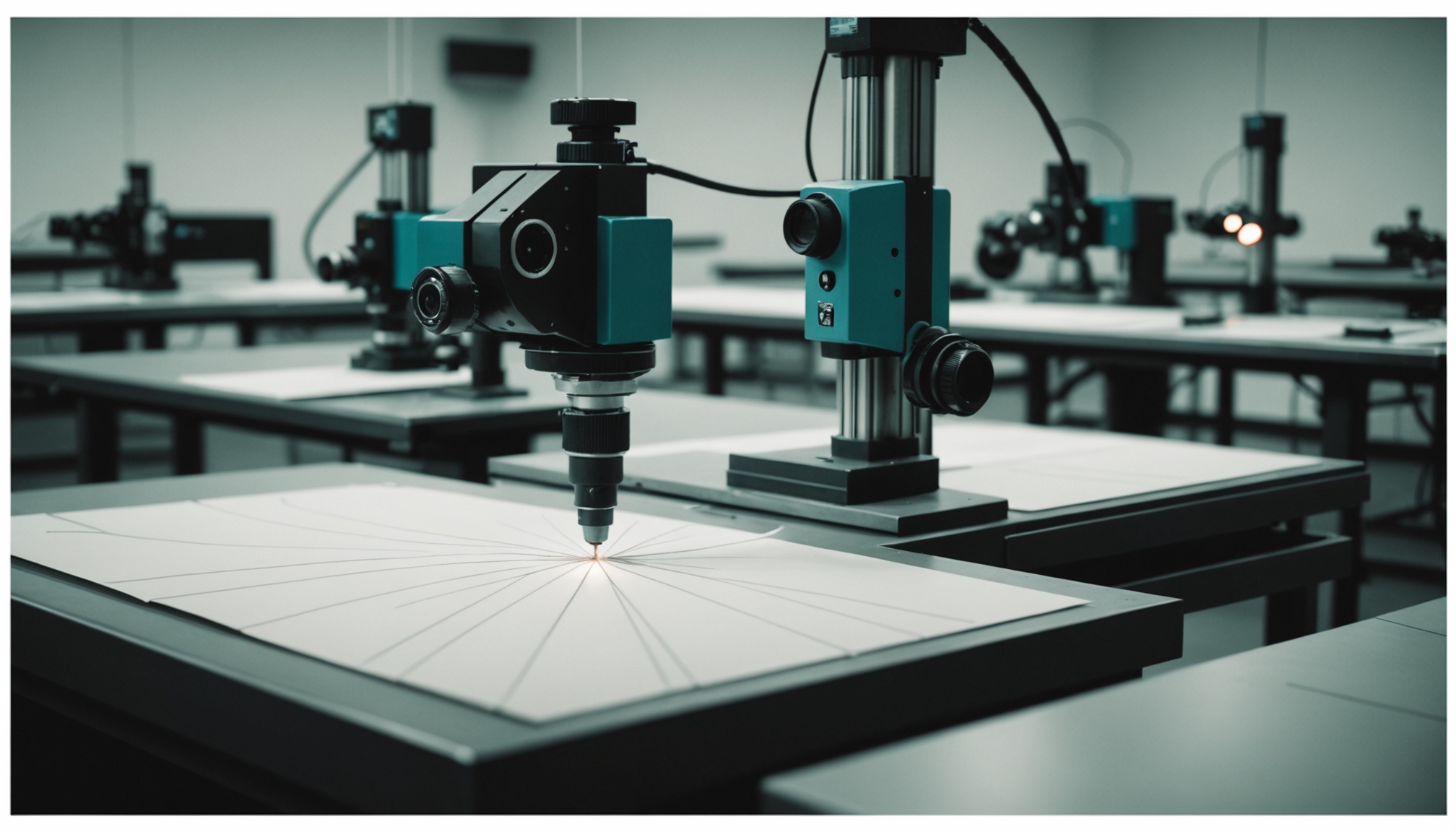
Understanding how electrons move inside matter is essential for future technologies, from quantum computing to electronics for artificial intelligence. Electrons move on time scales of attoseconds, where one attosecond is a billionth of a billionth of a second. To film such motion, the team used ultrafast scanning tunneling microscopy, a technique in which an atomically sharp metal tip is placed extremely close to a sample so that individual electrons can be controlled and measured.
Watching electrons tunnel in attoseconds
The researchers built a new laser system whose pulses push electrons from the metal tip to a silver surface across a distance of only a few atomic diameters. By varying the interval between two light pulses, they could observe how the electrons respond. The electrons do not travel like classical particles. Instead they tunnel, meaning they cross an energy barrier they should not be able to pass, acting as quantum waves. Computer simulations matched the measurements closely and showed that the electron follows the light field with a tiny delay of 500 attoseconds.
The team also confirmed the tradeoff at the heart of the space-time limit: the more precisely an electron's timing is fixed, the more energy is needed, and the more its wave packet, the quantum description of where the electron is, spreads out in space. Using a single atom on the surface to confine the wave packets, the researchers measured this relationship directly and showed the packets stay sharp enough for atomically resolved microscopy.
The finding matters because it defines a fundamental boundary for measuring and controlling electrons, while also opening new applications. In the long term, the work could help electronics and quantum information processing run at the intrinsic speed limit of electron motion, potentially hundreds of thousands of times faster than today's dominant CMOS technology.